- Your cart is empty
- Continue Shopping

Cysts on Kidneys: Causes, Symptoms, Treatment & When to Worry

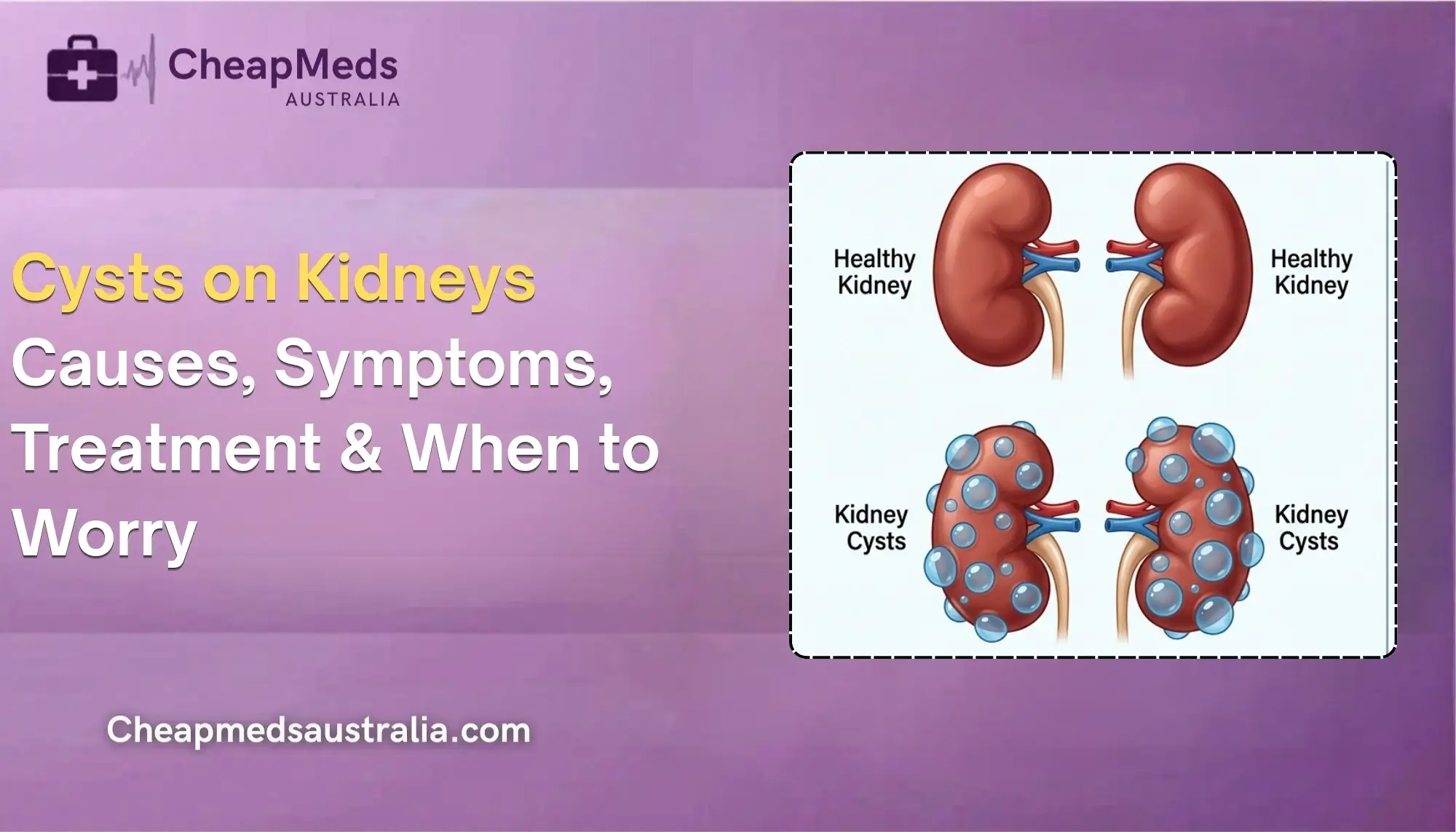
Discovering you have cysts on your kidneys can feel alarming — but in most cases, it’s far less frightening than it sounds. Kidney cysts are surprisingly common, often cause no symptoms at all, and the majority never require treatment. That said, some kidney cysts do need medical attention.
This article will tell you all you need to know about kidney cysts, including what they are, what causes them, how they are identified, and when you should be worried.
What Are Kidney Cysts?
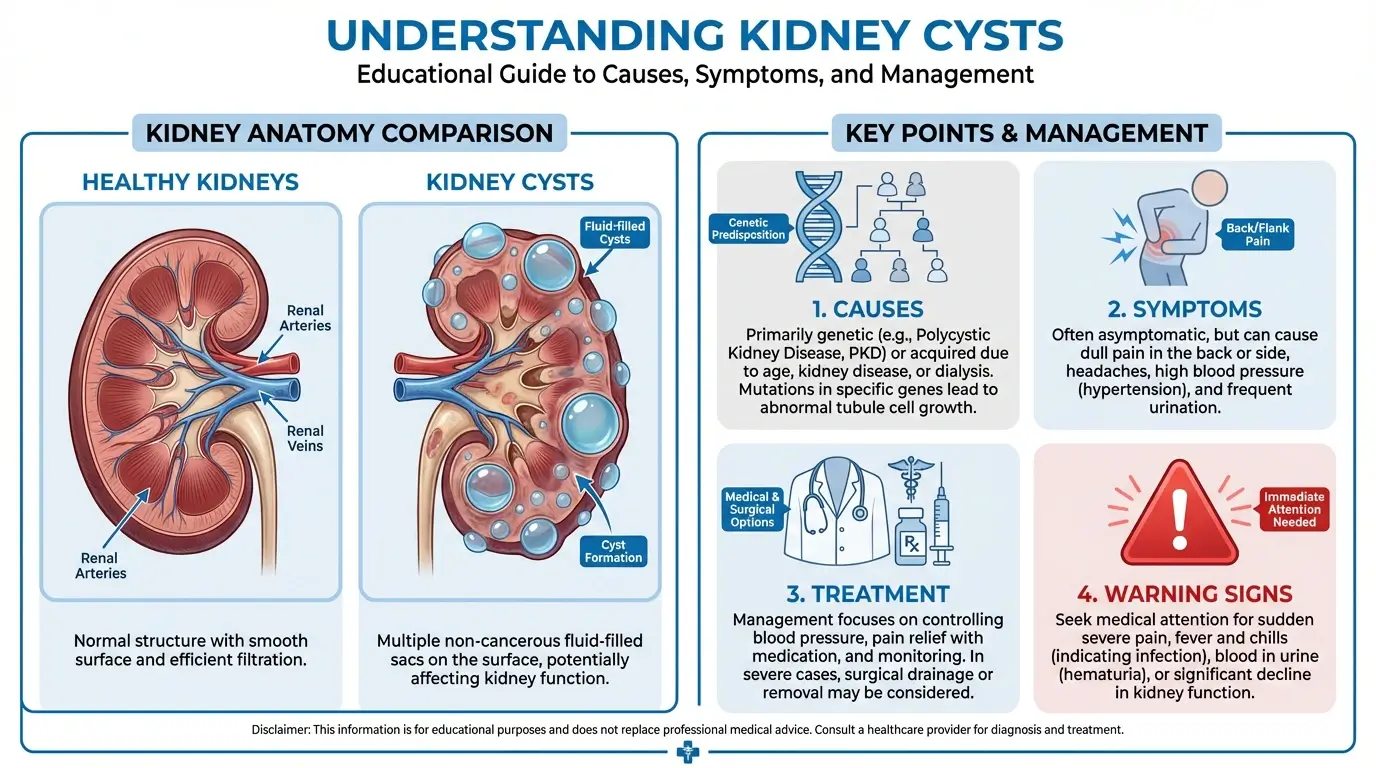
Kidney cysts are spherical sacs that fill with fluid and grow on or inside the kidneys. They might be as small as a few millimetres or as big as a few centimetres. Most kidney cysts are benign (non-cancerous) and are called simple kidney cysts.
The walls of simple kidney cysts are smooth and thin, and they only hold watery fluid. They are the most prevalent variety and usually don’t affect kidney function.
Less commonly, people develop complex kidney cysts, which may have irregular walls, internal divisions (septations), or solid components. Complex cysts require closer monitoring as they carry a slightly higher risk of being cancerous.
Types of Cysts on Kidneys
1. Simple Kidney Cysts
These are the most common and least worrisome. They happen when a tiny pouch (tubule) in the kidney fills with fluid and expands. Most people who have simple kidney cysts aren’t even aware they have them and live regular lives.
2. Polycystic Kidney Disease (PKD)
PKD is a genetic condition that causes hundreds or perhaps thousands of cysts to form in both kidneys over time. PKD can seriously affect kidney function and may even cause renal failure, which is not the case with minor cysts. There are two primary kinds:
- Autosomal Dominant PKD (ADPKD) — the most common inherited form, typically presenting in adulthood
- Autosomal Recessive PKD (ARPKD) — rarer and usually detected in infancy or childhood
3. Acquired Cystic Kidney Disease
People who have had chronic kidney disease or have been on dialysis for a long time are more likely to have this type. It’s not inherited like PKD.
4. Complex Kidney Cysts
Classified using the Bosniak classification system (I–IV), complex cysts have a higher likelihood of being malignant. They need regular imaging and possibly surgery to get rid of them.
Don’t ignore early signs of kidney issues — find the right care options and start your journey to better kidney health now.
What Causes Cysts on Kidneys?
We don’t know exactly what causes simple kidney cysts, however there are a few things that seem to be linked to their growth:
- Age — After age 50, kidney cysts are more likely to happen. Almost half of all adults have at least one by the time they turn 70.
- Male sex — Men are more likely than women to get kidney cysts.
- Genetics — PKD is directly inherited. A family history of simple cysts may also be a factor.
- Kidney tubule obstruction — Blockages in the small tubes of the kidney can cause cysts to form.
- Chronic kidney disease — Long-term kidney problems raise the likelihood of cysts.
- Low blood flow — Parts of the kidney may not get enough blood, which could be a factor.
Kidney Cyst Symptoms: Signs You Shouldn’t Ignore
Most kidney cysts don’t create any symptoms at all, which is one of the most critical things to know. Most of the time, they are found by accident during an ultrasound or CT scan that was done for a different reason.
When symptoms do occur, they may include:
- Dull, aching pain in the upper back, side, or stomach
- Fever (if the cyst gets infected)
- Frequent urination or changes in urine
- Blood in the urine (haematuria)
- High blood pressure — especially with PKD
- A feeling of fullness or swelling in the abdomen
If a cyst ruptures, it can cause sudden, sharp pain. A ruptured cyst should be evaluated by a doctor promptly.
Important: These symptoms could also mean you have other kidney problems. If you have any of these, you should always talk to your doctor.
How Are Kidney Cysts Diagnosed?
Most of the time, people don’t know they have kidney cysts because they don’t cause any symptoms. Your doctor may utilise the following tests to take images:
Ultrasound
Ultrasound is the most common first-line test for finding kidney cysts. It doesn’t hurt, doesn’t use radiation, and can clearly display the size and shape of a cyst.
CT Scan (Computed Tomography)
A CT scan gives a clearer picture and is especially helpful for looking at complicated cysts. It helps figure out if a cyst is simple or could be a problem.
MRI (Magnetic Resonance Imaging)
MRI is used when a CT scan is inconclusive, especially to assess whether a complex cyst might be cancerous.
Urine and Blood Tests
These tests can help figure out how well the kidneys are working overall, but they can’t directly tell if there are cysts.
Support your kidney health effectively — explore Renolog Tablet for managing chronic kidney disease and improving overall kidney function.
Kidney Cyst Treatment Options
Treatment depends on the type, size, and symptoms associated with the cyst.
1. Watchful Waiting (Active Surveillance)
For simple, asymptomatic kidney cysts, no treatment is needed. Your doctor will suggest getting ultrasounds every 6 to 12 months to check for any changes in size or shape.
2. Sclerotherapy (Aspiration and Drainage)
A needle is put through the skin and into the cyst while the doctor watches on a screen. The fluid is drained out, and a solution (sclerosant) is injected to make the cyst wall smaller and scar it so that it can’t fill up again. This is a minimally invasive procedure that works well for small cysts that cause symptoms.
3. Laparoscopic Surgery
If the cyst is big or causing problems, keyhole surgery may be suggested to remove it or drain it. This is usually harmless and doesn’t take long to heal.
4. Medications for PKD
People with polycystic kidney disease can take a medicine called Tolvaptan (brand name: Jinarc/Jynarque) to decrease the growth of cysts and safeguard renal function in individuals who are at risk of the condition getting worse quickly.
Some other medicines that are sometimes used to treat PKD problems are:
- ACE inhibitors or ARBs (such as Ramipril or Losartan) to lower high blood pressure
- Pain relievers — for chronic pain associated with cyst growth
- Antibiotics — if a cyst becomes infected
Kidney Cyst Size: When Should You Worry?
A common question is: how big is too big?
- Under 3 cm — Usually observed without treatment.
- 3–5 cm — Watched more closely; treatment is considered if there are symptoms.
- Over 5 cm — More likely to require intervention, especially if causing pain or compressing nearby structures
However, size is only one factor. For complex cysts, the Bosniak classification is more relevant. A small complicated cyst (Bosniak III or IV) may be more worrisome than a huge simple cyst.
Kidney Cysts vs Kidney Stones: What’s the Difference?
Kidney cysts and kidney stones are commonly confused with each other. Here’s a short look at the differences:
| Feature | Kidney Cysts | Kidney Stones |
| Nature | Fluid-filled sacs | Hard mineral deposits |
| Pain | Usually painless | Often severe, sudden pain |
| Cause | Age, genetics, PKD | Dehydration, diet, genetics |
| Treatment | Usually monitoring | Pain relief, hydration, and surgery |
| Risk | Usually benign | Can block urine flow |
Struggling with kidney pain? Explore safe and effective pain relief options designed to ease discomfort and support your recovery.
Can Kidney Cysts Affect Kidney Function?
Most of the time, no. Simple kidney cysts don’t usually get in the way of the kidneys’ filtering blood and making urine.
But in PKD, the quantity and size of the cysts can eventually push out healthy kidney tissue, which makes the kidneys work less well over time. In bad situations, PKD can cause chronic kidney disease (CKD) or end-stage renal disease (ESRD), which means you need dialysis or a kidney transplant.
Lifestyle Tips to Support Kidney Health
Whether you have kidney cysts or simply want to protect your kidneys, these habits can help:
- Stay well hydrated — 2 to 3 litres a day is a good goal.
- Eat a kidney-friendly diet — Low in sodium, processed foods, and animal protein.
- Control blood pressure — High blood pressure is the number one enemy of kidney health.
- Avoid NSAIDs long-term — Taking too many anti-inflammatory medicines can hurt your kidneys.
- Don’t smoke — Smoking worsens kidney disease progression
- Get regular check-ups — Get regular check-ups, especially if you have a family history of PKD.
Frequently Asked Questions (FAQ)
1. Are kidney cysts dangerous?
Most simple kidney cysts are not hazardous and don’t need to be treated. You should keep a closer eye on complex cysts or cysts that are linked to PKD, since they may be more dangerous.
2. Can kidney cysts go away on their own?
Simple kidney cysts don’t often go away on their own. But they often stay the same for years and don’t cause any difficulties.
3. Do kidney cysts cause back pain?
If you have large kidney cysts, you may feel a dull pain in your back or side. If you have sudden or severe discomfort, visit a doctor right away since a cyst may have burst or become infected.
4. Can you live a normal life with kidney cysts?
Yes, for sure. Most people with uncomplicated kidney cysts live regular, healthy lives, and their kidneys work just fine.
5. What foods should I avoid with kidney cysts?
There isn’t a specific diet that has been shown to shrink kidney cysts, but eating less sodium, animal protein, and processed foods is good for your kidneys in general. If you have PKD, several studies suggest that you should reduce your caffeine intake and drink a lot of water.
6. Is PKD curable?
Currently, there is no cure for PKD. However, medications like Tolvaptan can slow disease progression, and many people manage PKD successfully for decades.
Final Thoughts
Cysts on the kidneys are very frequent and usually not a cause for concern. A minor kidney cyst seen during a scan is usually nothing to worry about right away; you just need to keep an eye on it.
That said, if you have polycystic kidney disease or your cyst is getting bigger, more complicated, or causing symptoms, you should work closely with your doctor to find the best treatment choices.
Managing a kidney condition and looking for affordable medications in Australia? Visit CheapMedsAustralia for a wide range of prescription and over-the-counter medications delivered to your door.