- Your cart is empty
- Continue Shopping

Ibuprofen vs Paracetamol: Which Is Better for Pain, Fever & Headaches?


You’re standing in the medicine aisle, head pounding, and you’re staring at two boxes — ibuprofen and paracetamol. Both are a relief. They seem to serve almost the same goal. So which do you actually pick up?
If you have ever asked yourself this question, you are not the only one. It’s one of the most searched health comparisons around the world, and the answer is not as simple as a favourite. Both medicines are safe, effective, and accessible — but they do different things, and the best choice truly depends on what you’re treating and who’s taking it.
Let’s break it all down.
What’s the Difference Between Ibuprofen and Paracetamol?
Before we compare them head-to-head, it’s useful to know what each one actually accomplishes in your body.
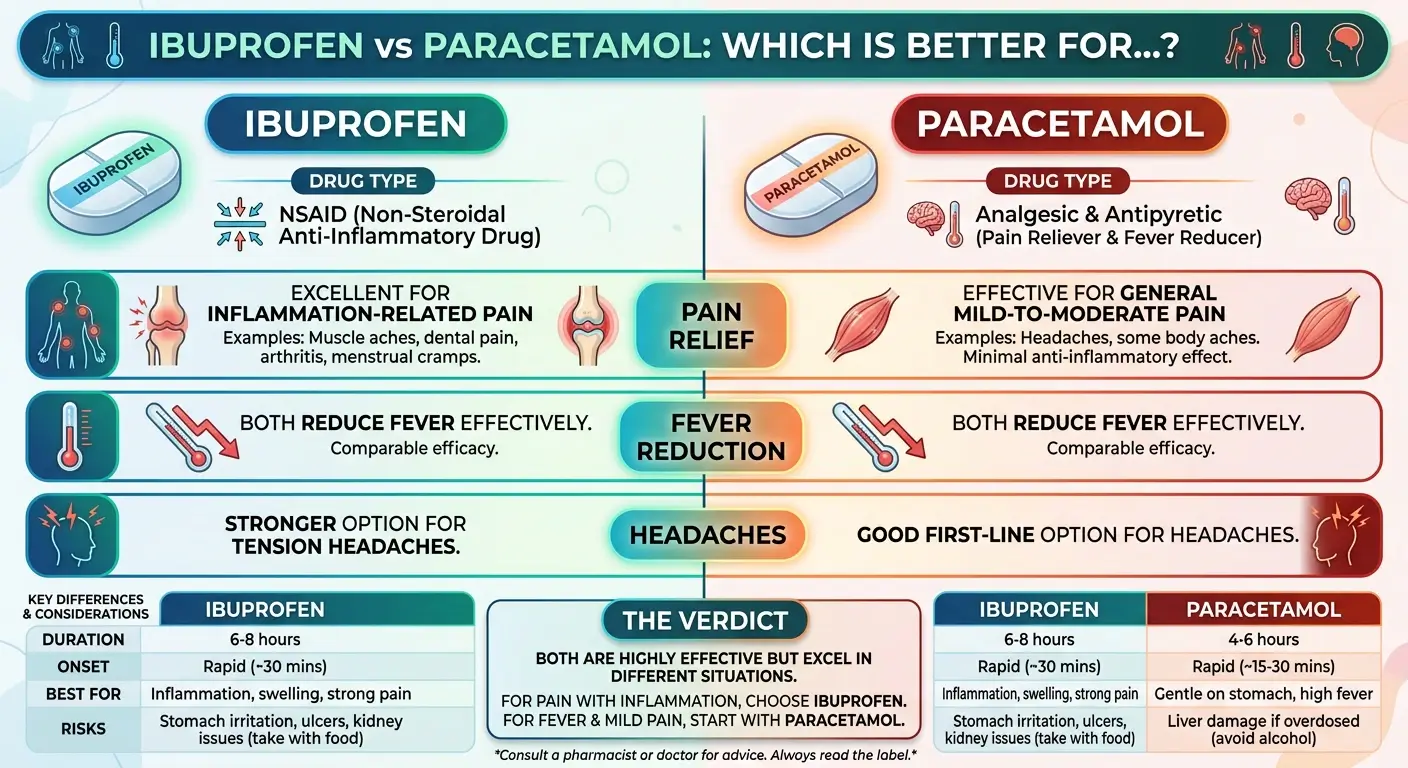
Paracetamol (known in certain countries as acetaminophen) acts mainly in the brain. It suppresses signals which tell your body it’s in pain, and it helps to reduce fever by acting on the temperature-regulating region in the brain. But it doesn’t cut down inflammation, which is its big disadvantage.
Ibuprofen, on the other hand, is a non-steroidal anti-inflammatory medication (NSAID). It works by preventing prostaglandins, substances that your body releases that cause pain, heat and inflammation. So ibuprofen works three ways at once: it takes the pain away, brings the fever down and fights inflammation.
This basic distinction is why one is better than the other, depending on your situation.
Ibuprofen vs Paracetamol for Headache
This is probably the most common reason people reach for either of these. And when it comes to paracetamol vs ibuprofen for headache, the evidence is a little nuanced.
For a regular tension headache — the kind you get after staring at a screen all day or skipping lunch — paracetamol tends to work just fine. It’s gentle on the stomach and kicks in fairly quickly. Most people feel relief within 30–45 minutes.
But if you are talking ibuprofen vs paracetamol for headaches that are caused by inflammation (sinus headaches, for example), ibuprofen often wins. It goes right to the inflammation, instead of just dulling the sensation, so it can get to the main problem.
Ibuprofen is generally thought to be more effective for migraines – especially at the onset of an attack. Ibuprofen has been proven in several studies to be better than paracetamol at relieving migraines, which are caused by inflammation of the blood vessels around the brain.
Quick verdict on headaches: Both work; ibuprofen is better for inflammatory or severe headaches, and paracetamol is a good alternative for mild to moderate tension headaches.
Need a trusted option for headaches, muscle pain, or fever? Brufen 200 Mg may help provide quick and reliable relief for common discomforts.
Paracetamol vs Ibuprofen for Fever
When it comes to ibuprofen vs paracetamol for fever, both work, and this is where personal circumstances come into play the most.
Studies suggest ibuprofen can reduce a fever slightly faster and keep it lower for longer than paracetamol. Ibuprofen also treats the underlying inflammation (which might produce a fever) while paracetamol only resets the body’s temperature thermostat.
That stated, paracetamol is usually the first recommendation for:
- Children under 3 months (ibuprofen is not appropriate for very young infants)
- Pregnant women (particularly post-first trimester)
- People with stomach ulcers or kidney issues
- Those taking blood thinners
Both are adequate to handle a fever for the average healthy adult. Some doctors even recommend rotating between the two (with proper time) during high or prolonged fevers—but always see a healthcare professional before doing this.
Quick decision on fever: Ibuprofen may work a bit better and longer, but paracetamol is the safest choice for sensitive individuals.
Ibuprofen vs Paracetamol for a Cold
This is an interesting one. With a cold, you’re generally dealing with a combination of symptoms – a stuffy head, body pains, sore throat, and perhaps a moderate fever. So, which is better: ibuprofen vs paracetamol for a cold?
Since many cold symptoms are inflammatory (think congested nasal passages and a scratchy, inflamed throat), ibuprofen often performs a better job of helping you feel human again. It is anti-inflammatory and simultaneously relieves bodily pains and fever.
Paracetamol is still a good option, especially if you are someone who cannot take ibuprofen. It’ll dull the pain and reduce a fever, simply without the anti-inflammatory added bonus.
Just keep in mind that ibuprofen can thin your blood a little, and it can interfere with some cold medicines. Always check labels carefully since many combination cold and flu medications already include paracetamol – accidental doubling up can be harmful.
Discover the best anti-inflammatory foods that may help support joint health, reduce swelling, and improve overall wellness naturally.
Which Is Safer Overall?
This is where it gets important to be honest: neither is completely without risk when misused.
Paracetamol risks:
- Overdose is surprisingly easy and can cause serious liver damage — this is one of the most common causes of acute liver failure in the AUS, UK and US
- The gap between a therapeutic dose and a hazardous one is smaller than most people think
- Always take the dose advised by your doctor (typically 1g every 4-6 hours for adults, maximum 4g per day).
Ibuprofen risks:
- Can irritate the stomach lining – take with food to reduce this
- Not suitable for people with kidney disease, heart problems, or asthma (in some cases)
- Should be avoided throughout pregnancy, especially in the third trimester
- Prolonged usage may raise the risk of cardiovascular events
Both are very safe when used as indicated for short-term, infrequent use in otherwise healthy adults.
Searching for paracetamol tablets online? Discover Paracetamol 500 Mg for convenient support against fever, pain, and flu-related symptoms.
Can You Take Both Together?
Yes. And doctors do sometimes recommend this short-term for pain management. Paracetamol and ibuprofen operate differently and can be safely used together or alternated if you:
- Take medications on a dosage schedule
- Do not exceed the recommended daily dose of either
- Ask your doctor or pharmacist, especially if you are taking additional medicines.
This combined technique is sometimes utilised for post-operative pain or severe dental pain when one medication alone is not doing the job.
Summary: Which Should You Choose?
| Condition | Better Option |
| Tension headache | Paracetamol |
| Migraine/sinus headache | Ibuprofen |
| Fever in adults | Ibuprofen (slightly) |
| Fever in children/pregnancy | Paracetamol |
| Cold & flu symptoms | Ibuprofen |
| Stomach sensitivity | Paracetamol |
| Muscle/joint inflammation | Ibuprofen |
| Long-term pain management | Consult a doctor |
From ibuprofen to paracetamol tablets, explore pain relief medicines suitable for managing everyday pain, swelling, and cold-related symptoms.
Frequently Asked Questions (FAQs)
1. Is ibuprofen stronger than paracetamol?
Not necessarily “stronger” — just different. In this case, ibuprofen is an anti-inflammatory drug and is therefore better for inflammatory pain than paracetamol. They are almost equally effective for simple pain and fever.
2. Which is better for a headache: ibuprofen or paracetamol?
Both are effective for most headaches. Of these, ibuprofen is usually more effective for inflammation-type migraines or headaches, but paracetamol is best for moderate tension headaches.
3. Can I take ibuprofen and paracetamol at the same time?
Yes, they can be used together. There are various ways to work, and they are safe to utilise together. Many medical doctors suggest rotating them to better reduce discomfort. Always follow dose guidelines, and check with a doctor if you’re not sure.
4. Which is safer for long-term use?
We also don’t encourage long-term self-medication without medical supervision. Paracetamol can cause problems with the liver in high quantities, and long-term usage of ibuprofen can cause problems with the stomach, kidneys and cardiovascular system.
5. Which is better for fever: paracetamol or ibuprofen?
Both are beneficial in reducing fever. Ibuprofen might work a bit faster and last a bit longer. But paracetamol is the drug of choice for babies, pregnant women and people with certain health problems.
6. Is paracetamol or ibuprofen better for a cold?
Ibuprofen helps reduce inflammation (which causes a lot of the symptoms of a cold, such as sore throat and swelling of the nasal passages), as well as pain and fever. This is often better for the common cold.
7. Can children take both ibuprofen and paracetamol?
Both can be present in children at different times and in varying doses for their age. Avoid giving ibuprofen to babies less than 3 months old or weighing less than 5kg. Always follow age-specific dose recommendations and ask a paediatrician if you have any questions.
8. Ibuprofen vs Paracetamol: Which Works Faster for Pain Relief?
Both take 30-60 minutes to start working. The time to effect for general pain and fever is roughly the same, while ibuprofen may be slightly better for inflammatory pain.
Note
This article is for informational purposes only and is not a substitute for professional medical advice. Never start or mix medicines without first talking to a healthcare expert.
Final Thoughts
Both ibuprofen and paracetamol are useful drugs for pain and fever, but they are not precisely the same. Paracetamol is a common medicine used for fever and mild pain. Ibuprofen is a good option for bodily discomfort and inflammatory pain.
Knowing the difference between these medications might help you make the best choice when symptoms hit. The problem is to get the proper prescription for the particular ailment and to follow safe dosing recommendations.
If the pain or fever is severe, lasts for several days or is recurrent, always visit a health expert.